OMNI is an initiative aimed at promoting greater inclusion and diversity in the film industry
“The idea for the OMNI Inclusion Data platform came from our activities as a film funding institution in the areas of diversity and inclusion,” says Helge Albers, CEO of MOIN Film Fund.
“We had already established a diversity checklist for everyone applying to us for funding and had been having an ongoing discussion with the
industry about the issues,” he recalls, pointing out that “many of the conversations were highly anecdotal and, understandably, often emotionally charged.”
“There was a need and necessity for objective and verifiable figures regarding diversity and inclusion among cast and crew members in Germany” he explains.
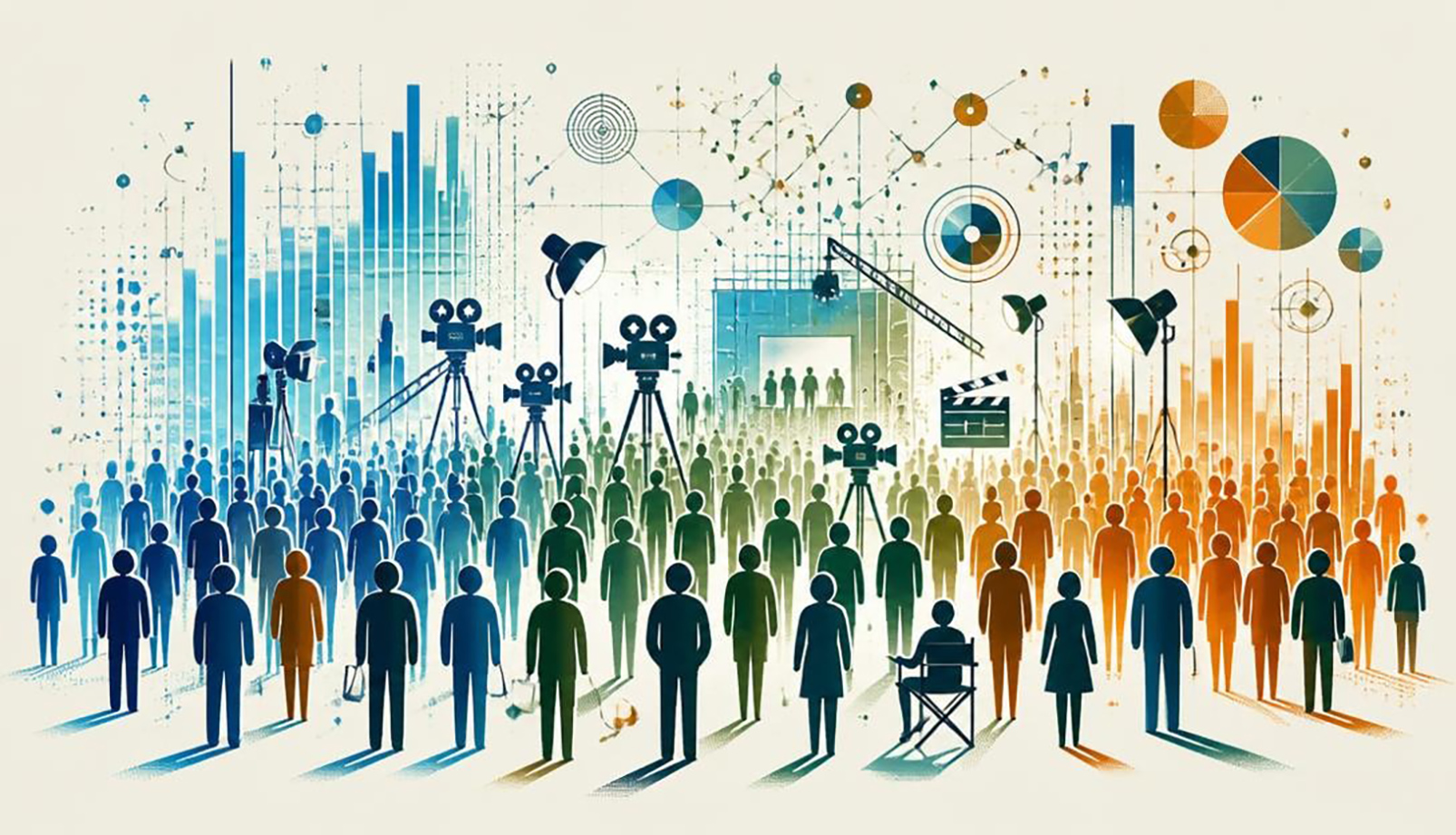
Canva AI-generated
Albers and his team looked at existing initiatives such as the Canada Media Fund and the UK’s Creative Diversity Network for inspiration and finally decided to have Australia’s The Everyone Project as OMNI’s partner particularly on the technical side.
OMNI’s pilot phase ran between March and September 2024 in cooperation with Film University Babelsberg Konrad Wolf, extending an invitation to 11 production companies and projects to complete a questionnaire about the level of diversity and inclusion in their workforce, with the platform’s industry-wide rollout following during the Berlinale in February 2025.
Apart from MOIN and fellow regional film funds MFG, Nordmedia and Hessen Film & Medien and on a national level by the FFA, the platform is also supported financially by companies from the private sector as diverse as Netflix, Constantin Film, ARD Degeto, Warner Bros. and Bavaria Film as well as ÖFI which is setting up its own Austrian version of the platform. “The questionnaire [www.omni-inclusion.de] is at the heart of OMNI and was developed in consultation with an industry advisory board comprising representatives from the various sectors,” says Inga Becker, who oversees the measures for diversity and inclusion at MOIN.
Among the organisations represented are the Produktionsallianz, German Film Academy, and Queer Media Societyas well as broadcasters and platforms like Sky, WDR and NDR and German film funders on both a regional and national level. “The 20 questions can be completed on a mobile phone or computer in around three minutes by cast and crew members once a project has been registered by their production company,” Becker explains.
“In addition to the usual categories such as age and sexual orientation, there is also a question specific to the situation in Germany about whether one grew up in West or East Germany and questions about caring responsibilities, among other things” she notes. The findings of the first OMNI Inclusion Data Report (https:// omni-inclusion.de/report) to cover a whole calendar year – from 1 January to 31 December, 2025 – appeared in August. The report was compiled on the basis of responses in full by 823 participants from the 4,002 invited cast and crew of 55 German film and TV projects.
The data confirmed, for example, that the industry is predominantly white (82.3%) with very few people having a migrant background (16.8%), something that is in stark variation to the 30.4% share registered for the overall German population in that category. In addition, the percentage of respondents identifying themselves as LGBTQIA+ was 20.5%, almost twice as much as the national average of 12%, although this might be explained in this case by the queer cast and crew members having been particularly motivated to raise awareness of their presence by taking part in OMNI’s survey. “What surprised us was how high the level of education within the industry is,” Becker says. 37.2% of the respondents had finished school with an Abitur, while an impressive 50.9% had completed studies in higher education, including some who had even continued to doctorate level.
“We’ve reached a stage where the OMNI tool is operating flawlessly, the reporting mechanism is in place and we now have the first report,” Albers concludes. “The next 2-3 years will see us continuing to accompany the industry in different ways to ensure that acceptance of the platform continues growing so that, with each new year, OMNI will be able to deliver valuable findings to promote greater diversity and inclusion.”
Martin Blaney
OMNI in a nutshell
OMNI Inclusion Data is a Diversity Management Tool that uses GDPR-compliant surveys to collect data among cast and crew working on German film sets. The aim is to create an up-to-date and continuously growing database on diversity within film and TV teams, making it possible to identify developments and trends, highlight areas where representation remains limited, and provide a factual basis for targeted measures. The database can be used by broadcasters, production companies, funders etc. and will publish a yearly report for the whole industry.
OMNI Inclusion Data has been open to the entire German film industry since 2025.
Projects can be uploaded and activated on an ongoing basis. There is no fixed end date, as the tool is designed to collect data over the long term.
OMNI collects three categories of data:
• project data, like genre, form, etc. provided when a film project is registered;
• information on the roles of cast and crew members, based on a cast and crew list supplied by the production company;
• demographic data on cast and crew members collected directly through a three-minute online survey